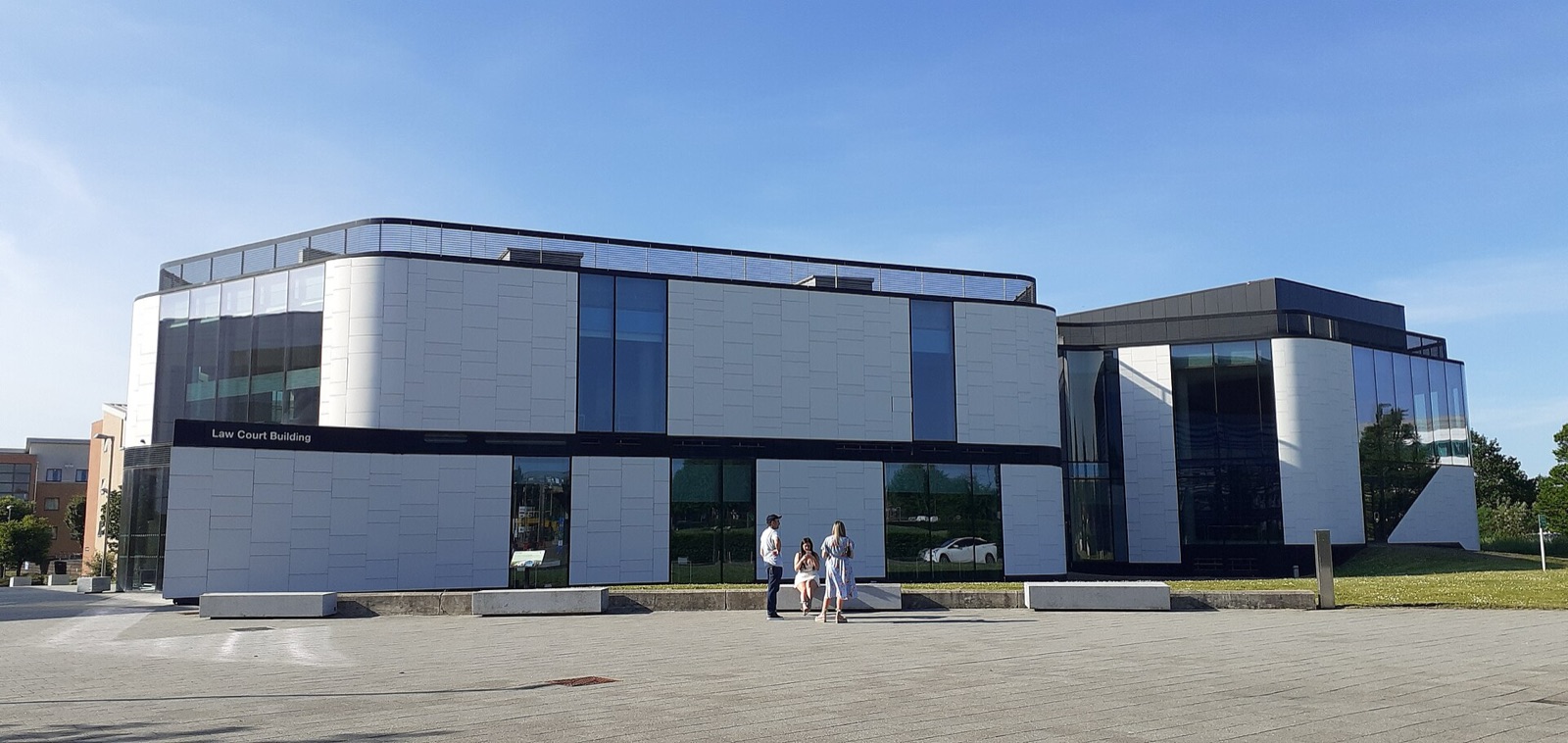

Hatfield is a university town where one institution dominates: the council describes the University of Hertfordshire as having about 36,000 students across two campuses. Shared houses have needed planning permission since 2011 under an Article 4 direction, and the university's own estate plan guides campus development. Published data on private PBSA stock, rents and occupancy is thin, so lenders underwrite each scheme on its own evidence.
City-level detail, including sales in the student postcodes and lending by type of lender, is in the H1 2026report on our sister site: Hatfield student accommodation report. For the national picture and trends, see the UK PBSA market report, H1 2026.
How large is the student living market in Hatfield?
Welwyn Hatfield Borough Council describes the University of Hertfordshire as having about 36,000 students and 3,000 staff across its two Hatfield campuses (Welwyn Hatfield Borough Council). HESA data points to roughly 25,000 full-time students, around 28% of them international (HESA 2023/24, approximate). The gap between the two figures reflects part-time, online and partner-college students who do not need a bed in the town.
For a town of Hatfield's size, that is a very large student population, and unlike cities with several universities it is concentrated in one place. A single university accounts for almost all demand, so a lender's view of any scheme in the town is, in effect, a view of the University of Hertfordshire's recruitment. International demand adds a policy dimension: UK sponsored study visa applications were 16% lower in the year to August 2026 than a year before (Home Office, August 2026).
Where do students live in Hatfield, Herts?
The popular student areas in Hatfield sit close to the two campuses, with public transport and cycle routes linking them to the town centre. For a lender, the location of a property relative to College Lane and de Havilland matters more than any other single factor, because students choose a room they can reach on foot or by a short bus ride.
College Lane
The university's main campus on the west side of the town, with the largest concentration of on-campus student accommodation. The university has applied for a five and six-storey health and social work teaching building here, an academic building rather than student housing (Welwyn Hatfield Times, October 2025).
de Havilland Campus
The university's second campus, a short distance south-west of College Lane, named after the de Havilland aircraft company whose aerodrome once occupied the area. It adds a second on-campus cluster of student rooms.
Hatfield Business Park
The former aerodrome site next to the de Havilland Campus, now a mixed business area. Its proximity to the campus makes it a logical location for student-related development where planning allows.
Hatfield town centre
The regenerating centre around Hatfield Station, within reach of both campuses by bus or bike and of London by train. Private student accommodation here competes with the university's own rooms and with shared houses.
What types of student accommodation compete in Hatfield, Hertfordshire?
Student accommodation in Hatfield falls into three types, and a financing case has to show where a scheme sits among them.
| Type | What it offers | What it means for a private scheme |
|---|---|---|
| University halls | On-campus rooms at College Lane and de Havilland, the default for first-year students | Sets the price and facilities benchmark; university room prices could not be confirmed at source |
| Private purpose-built student accommodation | Blocks such as Curzon Point and Luna, marketed to students on listing sites, with en-suite rooms and studio apartments | Competes on location, room types, facilities and contract length; no verified rents or occupancy published |
| Shared houses (HMOs) | Rooms in converted family houses | Supply restricted since 2011 by the Article 4 direction |
Private rooms are let fully furnished with bills included, so students compare the total cost of living in a block with a shared house plus bills, not the headline rent alone. Contract length is a real point of difference. Most student accommodation is let for the academic year, but some private operators offer full-year contracts to postgraduates and international students, which changes the income profile a lender models. Facilities, from study space to gyms and communal kitchens, and a safe, secure building with good security, support student life and lettings but add to operating costs, so lenders test them against the rent the Hatfield market will bear.
How does planning in Hertfordshire treat student housing?
Two policies shape the market. First, an Article 4 direction in place since April 2011 removes permitted development rights to convert family houses into houses in multiple occupation in Hatfield, so every new HMO needs planning permission and is assessed against the council's HMO supplementary planning document (Welwyn Hatfield Borough Council). That has limited the growth of shared student houses for more than a decade, which tends to direct demand towards purpose-built rooms and makes affordable student accommodation in managed blocks more important to the town's student living market.
Second, Policy SP21 of the Welwyn Hatfield Local Plan 2016 to 2036, adopted in October 2023, supports improvements to the university's facilities where they follow an agreed masterplan. The university's Estates Vision 2035 was endorsed by the council's Cabinet in December 2024 and is a material consideration in planning decisions (Welwyn Hatfield Borough Council).
We could not open the Estates Vision 2035 document to check whether it plans new student bedspaces, and we have not been able to verify any PBSA planning approvals, refusals or completions with bed numbers in Hatfield or Welwyn Hatfield for 2025 or 2026.
Why does the University of Hertfordshire matter to lenders?
In a one-university town, the relationship between a private scheme and the university is central to credit. A nomination agreement with the University of Hertfordshire, where available, can reduce letting risk; a scheme without one is judged on its location relative to College Lane and de Havilland, its rent against the university's own rooms, and its letting record. Our guide to nomination agreements and direct let explains how lenders treat each.
Rents are the second test. No verified private PBSA average rent or occupancy figure has been published for Hatfield, and the university's current room prices could not be confirmed at source, so any business plan will be checked against the scheme's own bookings. Nationally, Unite Group has said weekly rents now need to exceed £300 for new development to be viable outside London (Unite Group, H1 2026 results), a high bar for a new private scheme in a town of this size.
Financing student accommodation in the East of England
Hertfordshire's proximity to London and the University of Hertfordshire's scale make Hatfield attractive to investors, but the lack of published market data means lenders lean on scheme-level evidence.
- Development finance for consented schemes, typically 60 to 70% of cost and capped at 60 to 65% of GDV, with the university relationship and location tested closely.
- Investment and refinance on operating blocks at typically 55 to 65% LTV, sized on collected rent.
- Stabilisation finance for a new block through its first letting years, typically 12 to 36 months.
All lending is subject to status, valuation and lender criteria. We are a finance arranger and introducer, not a lender. Nearby markets: Luton, London and Cambridge.
Questions
Does Hatfield have an HMO Article 4 direction?
How many students does the University of Hertfordshire have?
Can I get finance for a student scheme in Hatfield?
What is classed as purpose built student accommodation?
- Welwyn Hatfield Borough Council, University of Hertfordshire planning policy guidance (Policy SP21, Estates Vision 2035)
- Welwyn Hatfield Borough Council, Article 4 directions
- Welwyn Hatfield Times, College Lane campus plans submitted, October 2025
- HESA, Higher Education Student Statistics 2023/24 (approximate figures via our Capital Monitor)
- Home Office, monthly entry clearance visa applications, August 2026
- Unite Group, interim results for the six months ended 30 June 2026
 Written and reviewed by Matt Lenzie, Founder and principal. Last reviewed .