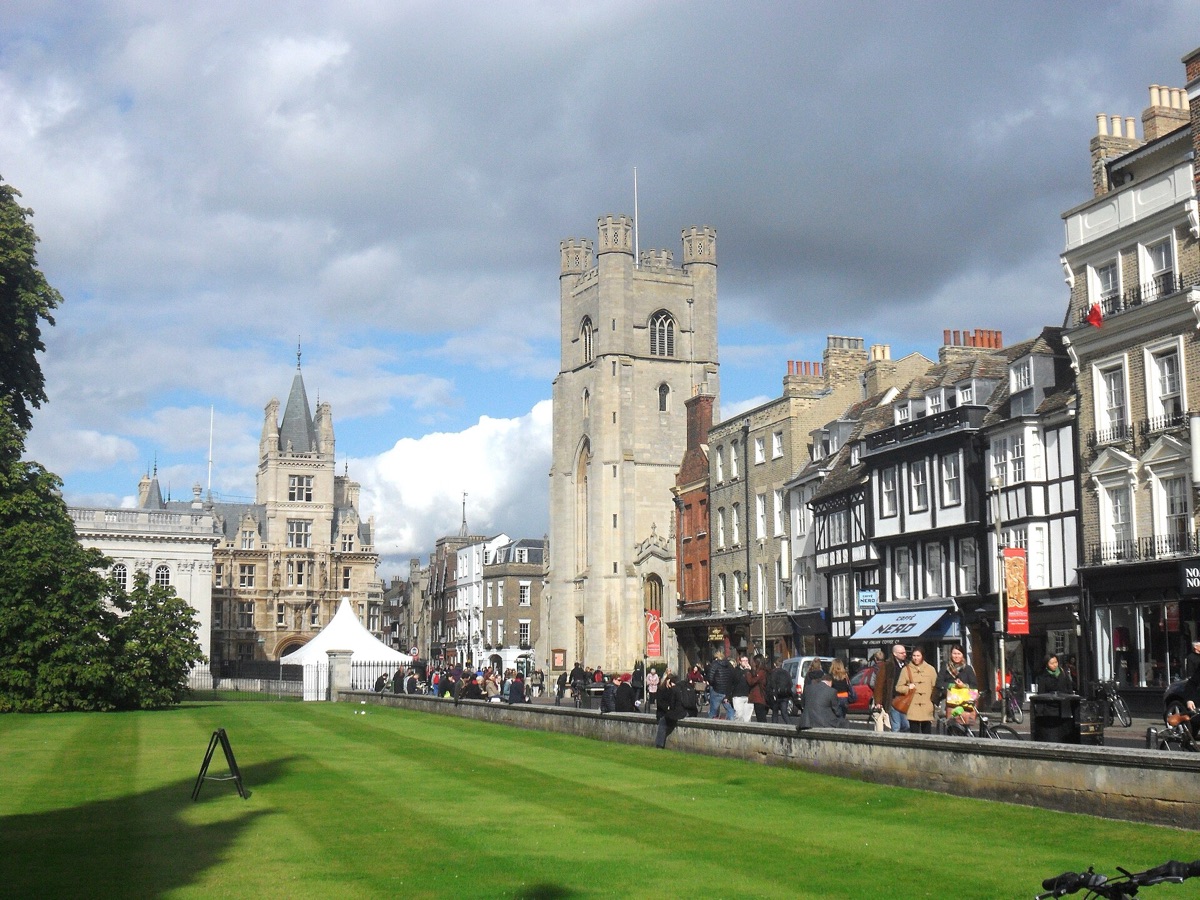

Cambridge, the historic city on the River Cam, is unlike any other UK student city. Most University of Cambridge undergraduates live in college, so private PBSA serves Anglia Ruskin, postgraduates and specialist demand. The draft Greater Cambridge Local Plan would limit new schemes to students of local institutions, so a university agreement sits at the centre of any finance case.
What is in the Cambridge student bed pipeline?
7 purpose-built student accommodation applications were lodged in the 12 months to H1 2026: 2 approved and 4 pending. Applications that state a bed count total 60 beds. Over the same period, 36 applications sought to convert homes into student HMOs.
60 beds stated in applications · 1 cell = 1 bed
Source: council planning exports, classified by us. Individual case references are withheld. Applications, not completions.
City-level detail, including sales in the student postcodes and lending by type of lender, is in the H1 2026report on our sister site: Cambridge student accommodation report. For the national picture and trends, see the UK PBSA market report, H1 2026.
Who needs purpose-built student accommodation in the City of Cambridge?
Cambridge has two universities with very different housing models. The University of Cambridge's colleges house most of its undergraduates, so demand for third-party student accommodation comes mainly from Anglia Ruskin University, whose main campus is on East Road, from University of Cambridge postgraduates and from specialist and language-school students. Our HESA-based monitor puts full-time students across both universities at roughly 30,000, with more than a third international (HESA 2023/24, approximate).
The University of Cambridge is adding its own supply at scale. On 16 September 2026 the joint development management committee resolved to grant outline permission for the next phases of Eddington, its North West Cambridge development. Subject to a Section 106 agreement, that allows up to 3,800 homes and accommodation for up to 1,675 students, on top of 325 existing student bedspaces. Reserved matters are expected from early 2027 (University of Cambridge, September 2026).
We have not found verified figures for Cambridge's private PBSA bed stock, occupancy or average rent, so we do not quote them.
How would the draft Greater Cambridge Local Plan affect student schemes?
Planning in the city is run jointly by Cambridge City Council and South Cambridgeshire District Council through Greater Cambridge Shared Planning. The draft Greater Cambridge Local Plan's student accommodation policy would limit new PBSA to students of an existing Greater Cambridge higher education institution, with written agreement from at least one institution before the building is occupied. Student bedrooms would count towards housing supply at 2.4 bedrooms per dwelling. The consultation closed on 30 January 2026 (Greater Cambridge Shared Planning).
For a lender, that turns the university relationship into a planning condition, not just a demand argument. A scheme without a letter of support or a nomination agreement with Anglia Ruskin, a college or another local institution would struggle to reach consent under the draft policy, and it would have a narrower letting pool once built.
The institution agreement: which institution, for how many rooms, for how long and at what rent. A nomination agreement with a strong covenant can support leverage in a way direct-let income in a small private market cannot.
Where is student housing built across Cambridge, UK?
Student housing in Cambridge divides between college and university stock in the city centre and at Eddington, and private accommodation serving Anglia Ruskin University around Mill Road.
Cambridge city centre
The historic city core, where colleges own and run most student housing. Cambridge City Council approved the redevelopment of Wolfson Court on Clarkson Road, replacing a 147-room block with 408 rooms that will also serve Newnham and Lucy Cavendish colleges and the Isaac Newton Institute (Ely Standard, August 2026).
Mill Road
Next to the Anglia Ruskin University campus on East Road, the main location for private student accommodation serving ARU. Sedley Court, a private hall near ARU, advertises en suite rooms at £184 per week with bills included for the 2026/27 academic year (Sedley Court).
Eddington
The University of Cambridge's North West Cambridge development, where most new university-led student bedspaces will come from.
Chesterton
North of the River Cam, a mixed market where student lets compete with young professional and key worker demand.
Cambridge Biomedical Campus
Around Addenbrooke's in the south of the city, where postgraduate, researcher and key worker demand overlap.
What is being planned for student living in Cambridgeshire?
Our planning monitor, covering Greater Cambridge, logged seven PBSA applications in the twelve months to mid-2026: two approved and four pending, with 60 beds stated where applications gave a number. Over the same period there were 36 applications to convert homes into student HMOs. The private applications we can see are small. The large verified additions come from the university and its colleges.
That shapes the opportunity. A private developer is more likely to fund a scheme in Cambridge in partnership with an institution, through a nomination agreement, a lease or a forward sale, than as a speculative direct-let block.
Financing a student scheme in Cambridge, England
We arrange development finance at typically 60 to 70% of cost, capped at 60 to 65% of gross development value, forward funding where an institution or investor takes the completed building, and investment debt at 55 to 65% LTV on let or nominated stock. All lending is subject to status, valuation and lender criteria.
- Institution agreement. Its term, the number of rooms, rent review and break clauses.
- Land and build cost. Cambridge land values are high, so the appraisal must work at rents the institution will pay.
- Planning. Consent that satisfies the draft Greater Cambridge policy, and a Section 106 position the valuer can price.
- Exit. A sale to the institution, a nominated investment, or a refinance on the nomination income.
We are a finance arranger and introducer, not a lender. Our guide to nomination agreements and direct let explains how lenders treat each. Nearby: London.
Questions
What counts as purpose built student accommodation?
Can a private developer build student accommodation in Cambridge?
How are Cambridge student schemes usually financed?
- University of Cambridge, University welcomes approval for up to 3,800 new homes at Eddington (September 2026)
- Greater Cambridge Shared Planning, Draft Local Plan consultation: student accommodation policy
- Ely Standard, Cambridge council approve 400-room student accommodation (August 2026)
- Sedley Court, private student hall (2026/27 rates)
 Written and reviewed by Matt Lenzie, Founder and principal. Last reviewed .