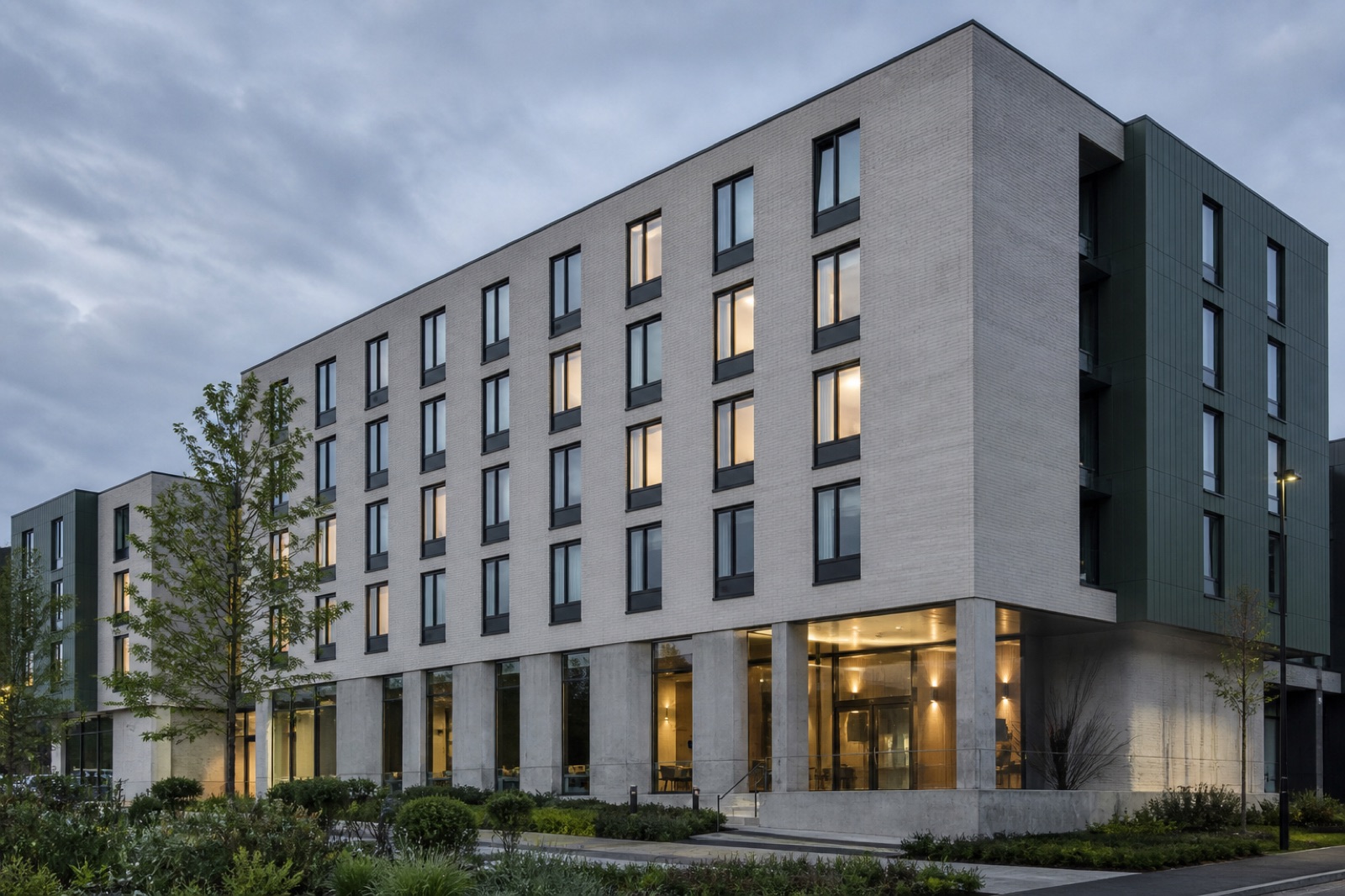
Unite Students is the largest UK owner and operator, with around 72,000 beds at June 2026 (Unite Group, July 2026). Homes for Students says it operates over 60,000 beds across more than 200 properties. iQ, owned by Blackstone, UPP and Greystar's Chapter, Canvas and Student Roost brands each report around 35,000 students, rooms or beds. Behind them sits a long tail of owners, operators and third-party managers, with universities still owning a large share of halls.
Who are the largest student accommodation providers in the UK?
The largest UK student accommodation providers are Unite Students and a small group of large private owners and operators, but there is no single official league table of student housing providers in Great Britain or the wider UK, no public data set of beds by owner, and companies report scale in different ways: beds, rooms, students housed or properties. The comparison table uses each provider's own published figure, with its date, so the numbers show order of magnitude rather than a precise ranking.
| Provider | Ownership or model | Published scale | Source |
|---|---|---|---|
| Unite Students | Unite Group plc, listed on the London Stock Exchange | c.72,000 beds | Unite Group, interim results, July 2026 |
| Homes for Students | Independent operator; brands include Prestige Student Living and EVO Student | Operates over 60,000 beds in 200+ properties | Homes for Students website, September 2026 |
| iQ Student Accommodation | Owned by Blackstone since 2020 | 80+ properties in 29 towns and cities; 35,000+ students | iQ website, September 2026 |
| UPP | University partnerships (design, build, fund and operate) | 35,000 rooms; 15 long-term university partnerships | UPP website, September 2026 |
| Greystar (Chapter, Canvas, Student Roost) | Global real estate owner, operator and developer | More than 35,000 student beds across three brands | Student Roost website, September 2026 |
| Hello Student (formerly Empiric) | Acquired by Unite Group, January 2026 | 7,700 beds across 68 buildings in 22 cities | Unite Group, January 2026 |
| Downing Students | Developer and operator, founded 1988 | 14 properties across 10 UK cities | Downing Students website, September 2026 |
| CRM Students | Third-party manager, part of The Dot Group since 2024 | Management services for over 27,000 rooms | CRM Students website, September 2026 |
| Fresh | Management business of Watkin Jones plc | Manages c.20,000 student beds and build to rent apartments | Watkin Jones, half-year results, May 2025 |
| Vita Student | Part of Vita Group | 29 communities with 10,009 beds (UK and Spain) | Vita Group website, September 2026 |
| Scape | Part of Meanwhile; UK and Australia | 7,500 beds in operation and under development | Scape website, September 2026 |
Published figures as stated by each source on the date shown. Beds, rooms and students housed are not directly comparable, and operators that manage for others count beds they do not own.
Other significant names in the UK PBSA sector include Yugo, which operates more than 280 student communities in over 120 cities worldwide (Yugo, September 2026), and operators such as Host (formerly Victoria Hall), Collegiate, Urbanest and Now Students, several of which focus on premium studios in prime city centre locations. We have not found current, citable UK bed counts for these providers, so we list them without figures.
Why is Unite Students the biggest PBSA provider?
Unite Students is the student accommodation brand of Unite Group, a UK real estate investment trust that owns, develops and operates purpose-built student housing. It describes itself as the UK's largest provider of student accommodation (Unite Group, January 2026).
Its lead widened in January 2026, when Unite completed the purchase of Empiric Student Property, adding 7,700 beds across 68 buildings in 22 cities and taking the combined portfolio to 71,000 beds across 29 cities, 92% of them in Russell Group cities (Unite Group, January 2026). Knight Frank valued the deal at around £720 million (Knight Frank, Q1 2026).
Unite is now reshaping that portfolio. Its July 2026 interim results reported around 72,000 beds and a £9.7bn portfolio valuation (Unite's share £6.7bn), and set a plan to reduce to around 55,000 to 60,000 beds, cutting its presence from 29 to around 20 cities, with 15,000 to 20,000 beds identified for sale (Unite Group, July 2026). It is also developing with universities, including joint ventures in Newcastle and with Manchester Metropolitan University targeting 4,300 beds for delivery between 2028 and 2030 (Unite Group, July 2026).
Where do the large providers operate, and what do students pay?
The major providers of student housing across the United Kingdom concentrate on large university cities. London, Manchester, Birmingham, Leeds, Nottingham, Bristol, Glasgow and Edinburgh each host schemes from several of the brands above, usually in or near the city centre and close to campus. Smaller cities are served by fewer, often regional, operators and by university halls.
Most providers let rooms online: students book student accommodation directly on the operator's website, and first-year and international students often start looking many months before the academic year. Student living in these schemes is sold by the room, per week, for the academic year, with bills, wifi and contents insurance included. Rent varies widely by city and room type. Scape, for example, advertises rooms in central London from £301 per week and Leeds rooms from £220 per week (Scape, September 2026). Studios cost more than en-suite rooms in cluster flats, premium London student property costs more than anywhere else, and prime schemes near the main campus command the highest rents.
Large providers compete with each other and with the private rented sector, where many returning students live in shared houses let by private landlords. That private rental market sets a ceiling on what purpose-built student accommodation (PBSA) can charge in each city centre. International students are a core market for city centre studios and premium student living, which is why operators with London and Russell Group exposure have grown fastest. For how purpose-built rooms compare with shared houses, see PBSA vs student HMO, and for rent and supply data by city, the PBSA Capital Monitor.
What is the difference between PBSA owners, operators and managers?
The biggest PBSA providers play different roles, and the distinction matters when comparing them.
- Owner-operators such as Unite Students own their buildings and run them under their own brand. Scale sits on their balance sheet.
- Investor-backed platforms such as iQ and Greystar's brands are owned by large investment managers. The platform runs the buildings; the investor owns the capital.
- Third-party managers such as CRM Students and Fresh run buildings on behalf of other owners for a fee. Their scale is measured in beds managed, not owned.
- University partnership specialists such as UPP design, build, fund and operate accommodation on university campuses under long-term agreements.
Universities themselves remain major providers of student accommodation, and many act as university partners to private providers, owning halls directly or through partnerships. And behind many private schemes are developers and funds that own one or a handful of buildings and appoint an operator to run them. For how these relationships shape income, see nomination agreements vs direct let.
Which investors own UK student housing?
Much of the UK's private student housing is owned by global institutional capital, and the property is often held separately from the brand students see. Blackstone bought iQ Student Accommodation for £4.66bn in 2020, when the portfolio housed around 28,000 students across 66 properties in 27 UK towns and cities (Kirkland & Ellis, 2020). Greystar, a global real estate owner, operator and developer, runs the Chapter, Canvas and Student Roost brands in the UK (Student Roost, September 2026).
Institutional money continues to flow into student housing, as into other living sectors such as build to rent, despite higher interest rates. Investors committed £4.3bn to UK PBSA in 2025 across 79 deals (Knight Frank, February 2026), and Q1 2026 brought £2.1bn, including the Unite and Empiric deal and a joint venture with Manchester Metropolitan University of around £390m for 2,300 beds (Knight Frank, Q1 2026). That appetite is now more selective: occupancy across the wider sector averaged around 86% in 2025/26 (Unite Group, February 2026), and rental growth slowed to 2% (Knight Frank, 2025/26). For the latest update on demand, supply and pricing, see the UK PBSA market guide.
How is the purpose-built student accommodation sector consolidating?
The largest providers are getting larger, but also more selective. Unite's takeover of Empiric took a listed student accommodation specialist off the market, and its plan to sell 15,000 to 20,000 beds will put a large volume of regional stock into the hands of other owners (Unite Group, July 2026).
The latest data shows a flight to the strongest university cities, where the large providers see the most rental growth potential. Unite says it is aligning its portfolio with the UK's strongest universities (Unite Group, July 2026), and Knight Frank reports that 81% of new beds delivered in 2025 were in Russell Group cities (Knight Frank, Q2 2026). Student housing assets in weaker locations are likely to change hands at keener prices, creating opportunities for smaller owners and operators who can run them well.
What does provider scale mean for PBSA developers and lenders?
For a developer, the large providers are often the exit, and their appetite drives land values and development growth in each city. A scheme built for sale is typically sold to an institution or platform at practical completion, or forward funded by one from the start. Knowing which providers are buying, and in which cities, shapes the development appraisal.
For a lender, the operator is part of the credit, alongside the building itself and its building safety compliance. A scheme run by an established operator with a strong booking platform and track record in the city will usually be underwritten more favourably than one run by a new entrant. Lenders look at the operator's occupancy history, fee structure and management agreement terms. See PBSA investment finance and our overview of PBSA lenders.
We arrange finance for PBSA developers, operators and investors of all sizes; we are an arranger and introducer, not a lender, and all lending is subject to status, valuation and lender criteria.
Questions
Who are the largest student accommodation providers in the UK?
What are the main student housing providers in the UK?
Who owns iQ Student Accommodation?
Did Unite buy Empiric?
What is the current state of the UK PBSA market?
- Unite Group, Interim results for the half year to 30 June 2026
- Unite Group, Unite Group completes purchase of Empiric Student Property, January 2026
- iQ Student Accommodation, About us (accessed September 2026)
- UPP, About us (accessed September 2026)
- Student Roost, company website (accessed September 2026)
- Yugo, About us (accessed September 2026)
- Downing Students, About us (accessed September 2026)
- CRM Students, Corporate (accessed September 2026)
- Scape, Company (accessed September 2026)
- Homes for Students, Portfolio (accessed September 2026)
- Watkin Jones plc, half-year results, May 2025
- Vita Group, Vita Student (accessed September 2026)
- Unite Group, 2025 full-year results statement, February 2026
- Knight Frank, UK Student Accommodation Outlook 2025/26
- Kirkland & Ellis, Blackstone's £4.66 billion acquisition of iQ Student Accommodation, 2020
- Knight Frank, UK Student Market Update Q4 2025 (February 2026)
- Knight Frank, UK Student Market Update Q1 2026
- Knight Frank, UK Student Market Update Q2 2026
 Written and reviewed by Matt Lenzie, Founder and principal. Last reviewed .